
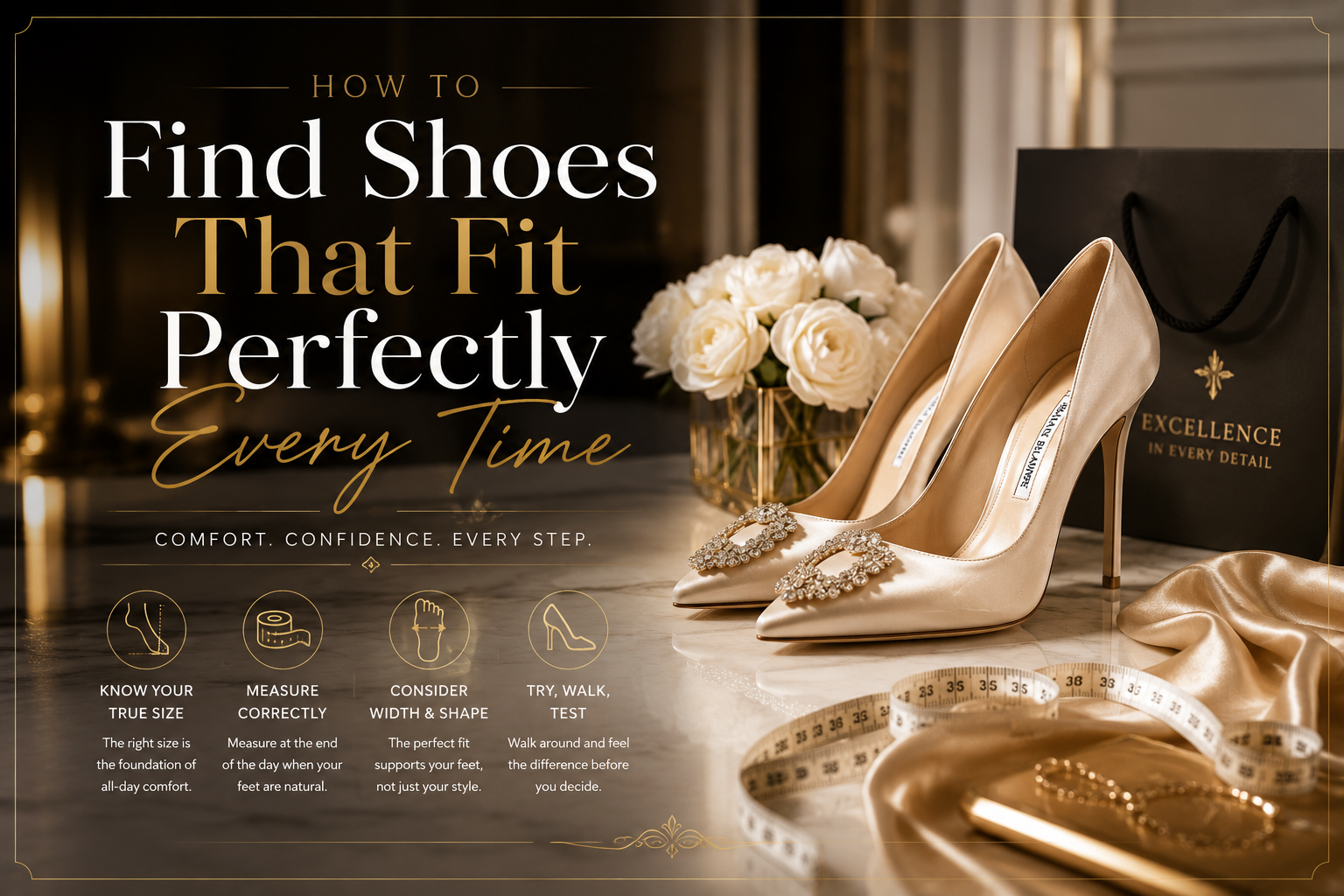
Buying a new pair of shoes should be exciting, not frustrating. Yet many people end up with footwear that feels too tight, too loose, or uncomfortable after just a few hours of wear. Poorly fitting shoes can cause blisters, foot pain, reduced performance, and even long-term health issues.
The good news is that finding shoes that fit perfectly isn’t just about choosing your usual size. Different brands, shoe styles, foot shapes, and intended activities all influence how a shoe feels on your feet. Understanding these factors helps you enjoy better comfort and avoid common fitting mistakes.
Why Proper Shoe Fit Matters
Comfort should always come before style. Properly fitting shoes support your feet, improve posture, reduce fatigue, and help prevent long-term foot problems.
Wearing shoes that fit correctly helps prevent:
- Blisters and hot spots
- Bunions and corns
- Heel and arch pain
- Toenail damage
- Knee and lower back discomfort
- Foot fatigue during long days

10 Steps to Find the Perfect Shoe Fit
Follow these practical steps before purchasing your next pair of shoes.
- Measure your feet regularly because foot size can change over time.
- Shop later in the day when your feet are naturally slightly larger.
- Know your foot shape, including width and arch type.
- Leave about a thumb’s width of toe room to allow natural movement.
- Check the shoe width to avoid squeezing or pressure points.
- Make sure your heel stays secure without excessive slipping.
- Wear the socks you’ll normally use when trying on shoes.
- Walk around before buying and pay attention to comfort.
- Don’t rely only on shoe size because sizing varies between brands.
- Choose shoes designed for your activity for the best support and performance.
Choose Shoes Based on Their Purpose
👟 Activity Guide
- Running: Cushioning and flexibility.
- Walking: Lightweight comfort.
- Gym: Stable sole and lateral support.
- Hiking: Grip, durability, ankle support.
- Dress Shoes: Snug fit without pressure.
💡 Fit Checklist
- Secure heel
- Comfortable arch support
- Natural toe movement
- No pressure points
- Comfort from the first wear
Common Shoe Fit Mistakes
- Buying shoes that are too small and expecting them to stretch.
- Ignoring shoe width and sizing up instead.
- Choosing style over comfort.
- Assuming every brand fits exactly the same.
- Expecting painful shoes to “break in.”
Tips for Buying Shoes Online
Shopping online is convenient, but taking a few extra steps can greatly improve your chances of getting the right fit.
- Measure both feet carefully.
- Read customer sizing reviews.
- Compare the brand’s size chart.
- Look for width options.
- Review the return and exchange policy.
- Compare measurements instead of relying only on your usual size.
Signs Your Shoes Fit Perfectly
A properly fitted pair should feel comfortable immediately and continue to support your feet throughout the day.
- Comfortable from the first wear.
- Heel stays securely in place.
- Toes have enough room to move freely.
- Natural arch support.
- No slipping, pinching, or numbness.
- Suitable for your intended activity.
The Takeaway
Finding shoes that fit perfectly every time starts with understanding your feet—not simply choosing your usual size. Measure your feet regularly, pay attention to width and toe room, test shoes while walking, and always match your footwear to your daily activities. Investing a little extra time before buying ensures greater comfort, healthier feet, and shoes you’ll enjoy wearing for years.
