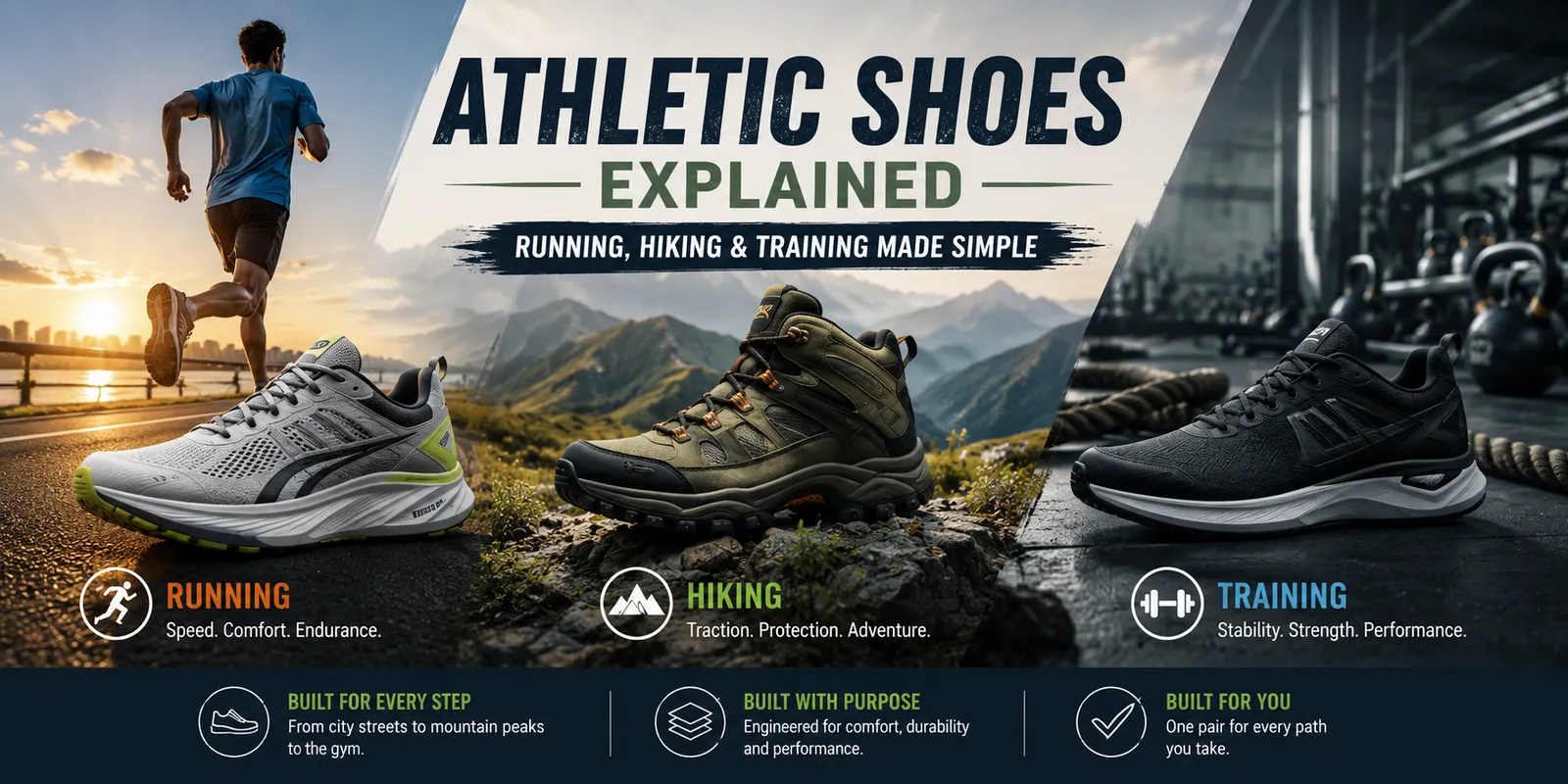
Although running shoes, hiking shoes, and training shoes may appear similar, they are built with unique features that support specific activities. Understanding these differences helps you choose footwear that matches your lifestyle and keeps you moving comfortably.
Why Every Activity Needs Different Shoes
Every workout challenges your feet differently. Running emphasizes repetitive forward motion, hiking demands grip and protection on uneven terrain, while gym training requires stability for lifting, jumping, and side-to-side movement.
- Running: Lightweight cushioning absorbs repeated impact.
- Hiking: Durable construction protects against rocks, mud, and rough trails.
- Training: Stable soles improve balance during strength and agility exercises.
- Specialized Design: Proper footwear improves comfort, performance, and safety.

Running, Hiking & Training Shoes Explained
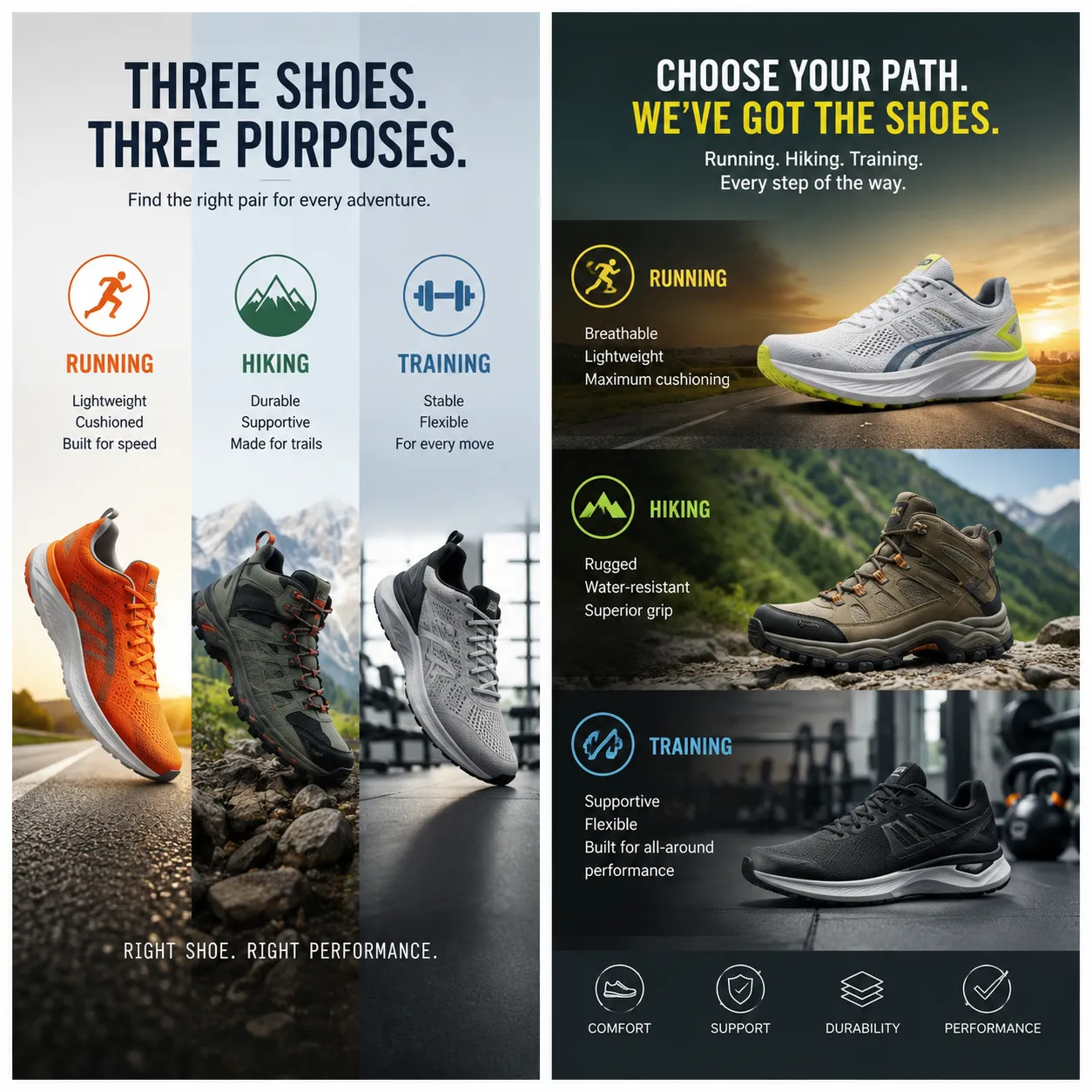
🏃 Running Shoes
- Best for road running and treadmills.
- Lightweight construction.
- Soft cushioning for shock absorption.
- Breathable mesh uppers.
- Flexible forefoot for smooth stride transitions.
🥾 Hiking & Training Shoes
- Hiking: Aggressive grip, waterproof options, reinforced protection.
- Training: Flat stable sole, lateral support, and durability for gym workouts.
- Designed for stability instead of long-distance running.
How to Choose the Right Athletic Shoes
Choosing athletic shoes becomes much easier when you focus on how and where you’ll use them most often.
- Match the shoe to your activity. Running, hiking, and training all require different features.
- Prioritize fit over brand. A comfortable fit always outperforms a famous logo.
- Select the right cushioning. Softer for running, firmer for lifting, balanced for hiking.
- Consider your terrain. Pavement, trails, and gym floors all require different outsole designs.
Common Mistakes to Avoid
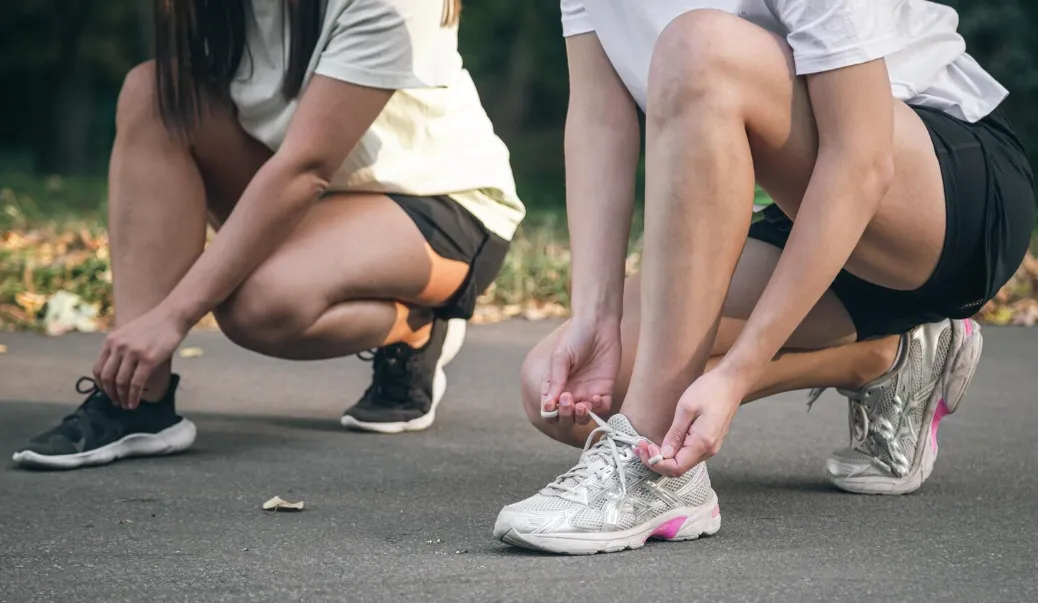
Matching the right shoe to the right activity helps maximize comfort while extending the life of your footwear.
- Using one pair of shoes for every sport.
- Choosing style over function.
- Ignoring arch support and proper fit.
- Waiting too long to replace worn-out shoes.
- Using running shoes for heavy weightlifting or hiking trails.
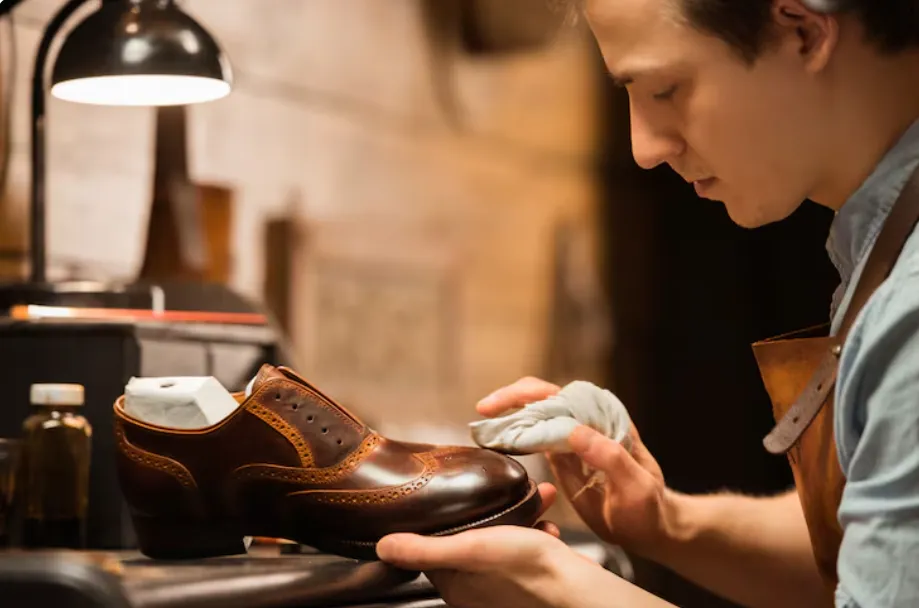
- Clean dirt after every workout or hike.
- Allow shoes to air dry naturally.
- Rotate between multiple pairs when possible.
- Store footwear in a cool, dry location.
- Replace worn insoles and shoes when cushioning begins to break down.
The Takeaway
Choosing the right athletic shoes is one of the simplest ways to improve comfort, performance, and safety during any activity. Running shoes deliver lightweight cushioning for forward motion, hiking shoes provide grip and protection on rugged terrain, while training shoes offer the stability needed for strength and gym workouts. Investing in activity-specific footwear helps you perform better, stay comfortable, and protect your feet every step of the way.