

Find the perfect pair for every stage of childhood—from first steps to school days, sports, outdoor adventures, and everything in between.
Choosing the right shoes for children is about much more than style. As kids grow, their feet develop rapidly, making supportive, comfortable, and well-fitted footwear essential for healthy movement and long-term foot health.
Today’s children’s footwear combines advanced cushioning, lightweight materials, breathable fabrics, and fun designs that kids love while providing the durability parents expect. Whether you’re shopping for a baby’s first shoes, durable school sneakers, waterproof rain boots, or supportive sports shoes, selecting the right pair can make every adventure safer and more comfortable.
This complete 2026 guide explores the best footwear for every age and activity, helping parents make confident choices that support growing feet.
Why Choosing the Right Kids’ Shoes Matters
Children spend countless hours walking, running, jumping, climbing, and exploring. Wearing shoes that fit properly helps support healthy foot development while reducing the risk of discomfort and injury.
Benefits of quality kids’ footwear
- Supports healthy foot growth
- Provides excellent comfort for all-day wear
- Improves balance and stability
- Protects little feet from rough surfaces
- Reduces fatigue during active play
- Offers better durability for everyday use
Investing in quality shoes means fewer replacements and happier, healthier feet.
Kids’ Shoes by Age

👶 Baby Shoes (0–12 Months)
For babies learning to crawl and stand, soft, flexible shoes are the best choice.
Look for:
- Soft soles
- Lightweight materials
- Breathable fabric
- Flexible construction
- Wide toe box
At this stage, shoes should protect tiny feet without restricting natural movement.
Toddler Shoes (1–3 Years)
Toddlers are constantly learning to balance and walk confidently.
Ideal features include:
- Non-slip rubber soles
- Cushioned insoles
- Adjustable hook-and-loop straps
- Rounded toe shape
- Flexible outsole
Supportive toddler shoes encourage healthy walking while keeping active little feet comfortable.
Preschool & School Shoes (4–12 Years)
School shoes must withstand busy days filled with learning and play.
Choose shoes with:
- Durable construction
- Breathable lining
- Shock-absorbing midsoles
- Easy fastening systems
- Reinforced toe protection
Neutral colors like black, navy, and white are practical and easy to pair with school uniforms.
Teen Shoes
As children become teenagers, comfort and personal style become equally important.
Popular choices include:
- Lifestyle sneakers
- Running shoes
- Casual slip-ons
- Basketball shoes
- Skate shoes
Look for supportive cushioning and durable materials that can handle daily wear.
Best Types of Kids’ Footwear
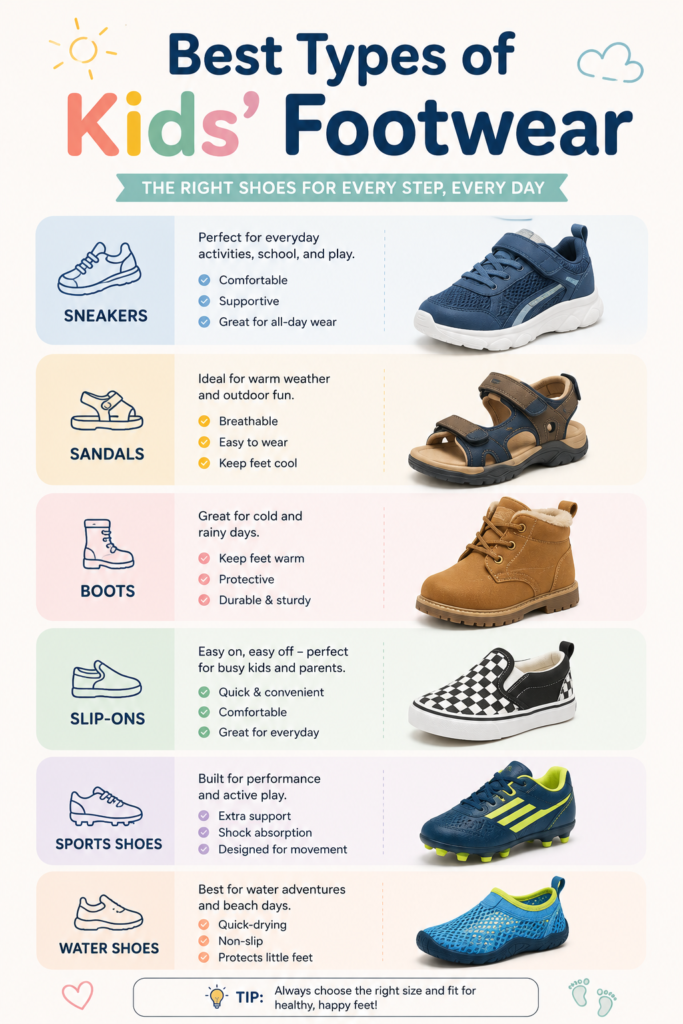
👟 Kids’ Sneakers
Sneakers are the ultimate everyday shoe.
Perfect for:
- School
- Playground fun
- Weekend outings
- Family trips
- Everyday wear
Modern sneakers feature lightweight foam cushioning, breathable mesh uppers, and flexible soles that support growing feet.
Kids’ Sandals
Warm weather calls for breathable sandals.
The best sandals include:
- Adjustable straps
- Cushioned footbeds
- Slip-resistant soles
- Quick-drying materials
They’re ideal for summer holidays, beach days, and outdoor play.
.
🥾 Kids’ Boots
Boots provide extra protection during colder months.
Popular options include:
Winter Boots
Designed with warm insulation and waterproof construction to keep little feet cozy.
Rain Boots
Perfect for puddle jumping, rainy walks, and muddy adventures.
Hiking Boots
Offer superior ankle support and traction for family hikes and camping trips.
⚽ Sports Shoes
Every activity benefits from footwear designed for movement.
Popular categories include:
- Running shoes
- Basketball shoes
- Soccer cleats
- Tennis shoes
- Cross-training shoes
These styles provide enhanced grip, stability, and shock absorption.
How to Choose the Perfect Kids’ Shoes

Measure Both Feet
Children’s feet grow quickly, so measure both feet regularly and choose the larger size if there’s a difference.
Leave Room to Grow
Allow about a thumb’s width of space between the longest toe and the front of the shoe. This gives growing feet enough room without compromising stability.
Prioritize Comfort
Children should be able to walk naturally the first time they try on new shoes.
Avoid footwear that requires a “break-in” period.
Look for Breathable Materials
Mesh fabrics, premium leather, and moisture-wicking linings help keep feet cool and dry throughout the day.
Choose Flexible Soles
Flexible soles encourage natural movement while still providing support and protection.
Best Shoes for Every Activity
School
Choose durable sneakers or school shoes with cushioned soles and reinforced toe caps.
Sports
Athletic shoes designed specifically for the chosen sport offer the best performance and protection.
Outdoor Adventures
Hiking boots provide stability, grip, and weather protection for exploring nature.
Rainy Days
Waterproof rain boots keep feet dry without sacrificing comfort.
Winter Weather
Insulated winter boots with grippy soles help children stay warm and safe on cold, slippery surfaces.
Summer Holidays
Lightweight sandals allow feet to breathe while providing secure support for active play.
Kids’ Footwear Trends in 2026
This year’s most popular styles combine playful designs with practical features.
Trending looks include:
- Colorful retro-inspired sneakers
- Eco-friendly shoes made from recycled materials
- Lightweight mesh running shoes
- Slip-on sneakers for easy wear
- Waterproof rain boots in bright colors
- Chunky sport sandals
- Cozy insulated winter boots
- Neutral everyday sneakers that pair with any outfit
Parents are increasingly choosing footwear that balances comfort, durability, and sustainability.
Caring for Kids’ Shoes
Extend the life of children’s footwear with these simple tips:
- Clean shoes regularly with a soft cloth or brush.
- Let wet shoes air dry naturally.
- Rotate between two pairs when possible.
- Replace worn-out insoles if needed.
- Check the fit every few months as children grow.
Proper care helps shoes stay comfortable and supportive for longer.
Frequently Asked Questions
How often should kids’ shoes be replaced?
Most children’s shoes need replacing every 6–12 months, depending on growth and activity level.
How can I tell if shoes are too small?
Watch for red marks, complaints of discomfort, cramped toes, or worn-out toe areas. These are common signs it’s time for a new pair.
Are expensive kids’ shoes always better?
Not necessarily. The best choice is a shoe that fits well, provides support, and matches your child’s daily activities.
Should kids wear the same shoes every day?
Rotating between two pairs helps each pair dry fully, reduces odor, and extends the lifespan of the shoes.
Final Thoughts
The right shoes help children move confidently through every stage of life. From a baby’s first steps to school days, sports practices, family vacations, and outdoor adventures, choosing footwear that fits well and supports healthy development makes a lasting difference.
By focusing on comfort, durability, breathability, and proper fit, parents can build a practical footwear collection that keeps growing feet protected all year long.
Whether you’re looking for everyday sneakers, sturdy school shoes, lightweight sandals, waterproof rain boots, or warm winter boots, investing in quality kids’ footwear ensures every step is safe, comfortable, and ready for the next adventure.
SEO Keywords: kids’ footwear 2026, best kids’ shoes, baby shoes, toddler shoes, school shoes, kids’ sneakers, kids’ sandals, kids’ boots, children’s shoes, kids’ shoe buying guide, comfortable kids’ shoes, waterproof kids’ boots.
